 13 56 22


 Business insurance
 Farm insurance
 Personal insurance
 Commercial motor & fleet insurance

Insurance
Select an insurance category to view our options:
At Elders Insurance, we're committed to keeping our customers up to date with the latest insurance news and information. It’s just another way we're helping you to better understand insurance and the types of cover that may be available.
Be sure to check back regularly for the latest updates.
The amount you pay for insurance depends on a few things, such as the cover you choose, your sum insured, and any optional extras included in your policy. Your excess and any claims you make will also determine your insurance premium.
Learn more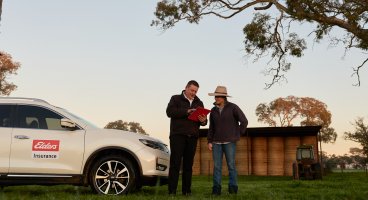
Elders Insurance is proud to launch its new national brand campaign, “You know where to find us”, highlighting the role local insurance experts play in helping Australian farming and business communities when challenges arise.
The campaign reinforces what makes Elders Insurance different: personal service, local expertise and trusted claims support delivered by people who live and work in the communities they serve.
Across dedicated farm and SME creative, the campaign shows local agents alongside customers through disruptions and claims situations. The stories bring the campaign message to life: “When you need us most, you know where to find us.”
From Sunday 1 November, campaign will appear across television and on-demand viewing, digital video, paid search, display, social media, audio podcast, press, brand channels and local agent marketing.
Watch the campaign TVCs and learn more:
To learn more or explore cover options, find your local Elders Insurance agent, call 13 56 22 or visit the relevant farm and business insurance pages.
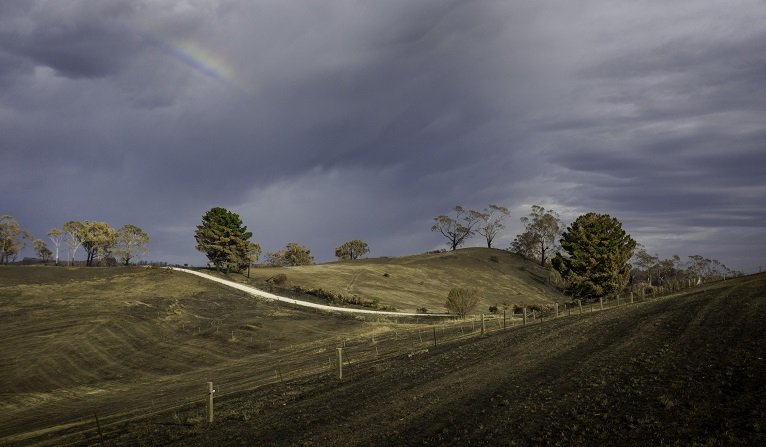
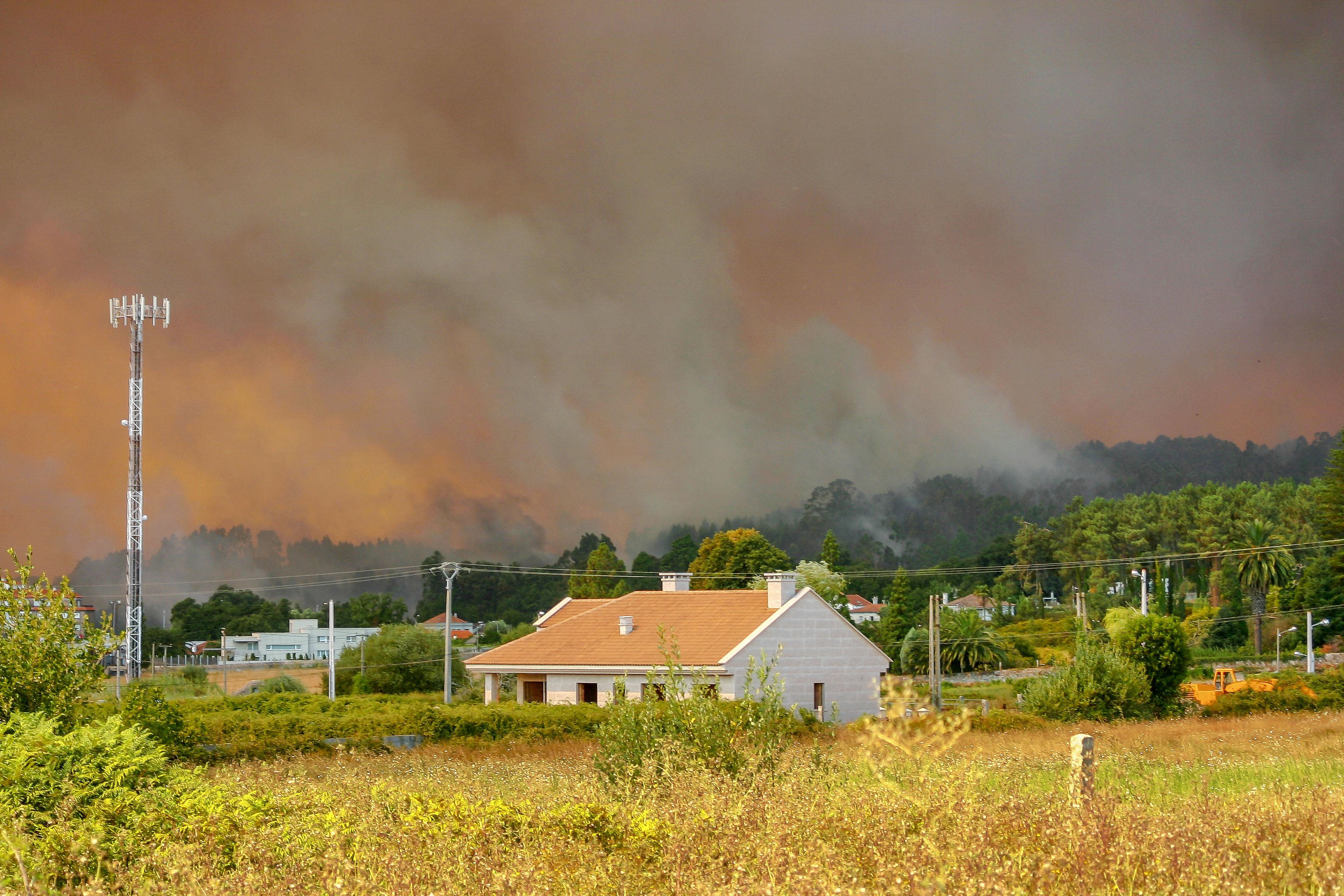
With another bushfire season on the horizon, business owners are being encouraged to think beyond immediate fire threats and consider how a major bushfire event could affect their operations.
While the impact of bushfires is often measured by damage to homes, farmland and communities, local businesses can face significant disruption even when they are not directly in the path of a fire.
Road closures, power outages, poor air quality and interruptions to supply chains can quickly affect a business's ability to operate, particularly in regional areas where industries are closely connected.
For Shepparton-based Elders Insurance representative Richard Barry, preparation is one of the most important steps business owners can take before temperatures rise.
"Businesses across our region are used to dealing with challenges, but having a plan in place before the season starts can make a real difference when conditions become more severe," Mr Barry said.
The Goulburn Valley's economy spans agriculture, transport, manufacturing, retail and small business, sectors that can all be affected by widespread bushfire activity, even if there is no direct physical damage to premises.
Mr Barry said many businesses underestimate the broader impacts a bushfire can have.
"A fire elsewhere in the region can still affect your staff, your customers and your supply chains," he said. "Understanding those risks ahead of time can help businesses respond more effectively if conditions change."
Having worked with customers through major Victorian bushfires, Elders Insurance Agent Will Phillips has witnessed both the challenges communities face and the resilience that often follows.
"The initial conversations with clients were very emotional," Mr Phillips said.
"What stood out to me most was the resilience of our clients. They faced enormous challenges, but they continued getting on with the job."
Drawing on those experiences, Mr Phillips said preparation is often about focusing on practical measures before an emergency occurs.
That can include maintaining properties by clearing gutters and managing vegetation around buildings, ensuring machinery and equipment are well maintained, and checking that access routes remain clear.
Businesses are also encouraged to consider how they would continue operating if access to their premises was restricted for days or even weeks. Alternative work arrangements, backup suppliers and secure storage of important records can help minimise disruption during and after an emergency.
Mr Barry said having a documented response plan can also help reduce confusion when quick decisions are required.
"Preparation isn't about expecting the worst," he said. "It's about understanding your risks and putting practical steps in place so your business can respond more effectively if something does happen."
Insurance is another area business owners are encouraged to review ahead of the season. As businesses grow and change over time, insurance arrangements may also need updating to reflect current circumstances.
Mr Phillips said major bushfire events often highlight the importance of ensuring coverage remains appropriate.
"It also highlighted the importance of reviewing insurance arrangements. Unfortunately, many people were underinsured," he said.
Several years on from some of Victoria's most significant bushfire events, Mr Phillips said the recovery process remains a powerful reminder of why preparation matters.
"You'll see that the paddocks have started to show a bit of green again, just four months ago this was just blackened earth," he said.
For local businesses, that recovery can take time, making planning and preparedness an important part of navigating the season ahead.
As summer approaches, Mr Barry believes taking a proactive approach now can provide greater confidence for business owners and their employees.
"Taking time now to review your plans, understand your risks and ensure your insurance arrangements are up to date can provide greater confidence going into bushfire season," he said.
While bushfires remain unpredictable, preparation is one factor businesses can control, and for many across the region, the time to start is before the first warning arrives.
This content is brought to you by Elders Insurance (Underwriting Agency) Pty Ltd, (ABN 56 138 879 026, AFSL 340965) (Elders Insurance) as a convenience to readers and is not intended to constitute advice (professional or otherwise) or recommendations upon which a reader may rely.
The information is general only and does not take into account your personal circumstances, financial situation or needs.
Elders Insurance makes no warranty or guarantee about the accuracy, completeness, or adequacy of the content. Readers relying on any content do so at their own risk. It is the responsibility of the reader to evaluate the quality and accuracy of the content. Reference in this content (if any) to any specific product, process, or service, and links from this content to third party websites, do not constitute or imply an endorsement or recommendation by Elders Insurance and shall not be used for advertising or service/product endorsement purposes.

New research commissioned by QBE and conducted by Oxford Economics Australia found that major disruptions can continue to influence local business communities for years after the initial event, creating a 'recovery gap' between where a communtiy ends up and where it otherwise would have been without the disaster.
Recovery can take longer than expected
The research examined seven significant bushfires, floods and cyclones that occurred across Australia between 2018 and 2023. By comparing affected communities with similar areas that did not experience a major disruption, researchers were able to estimate how local business communities changed over time.
One of the key findings was that the greatest impact was not always felt immediately.
In the year a major disruption occurred, affected communities were estimated to have around 3% fewer small and medium-sized enterprises (SMEs) than they otherwise would have had. After one year, that gap widened to 4%. The largest impact emerged after two years, when business numbers were estimated to be 9% below expected levels, representing around $43 million in annual economic activity that is never realised. While the 'recovery gap' begins to stabilise in the third year, affected communities remain below their expected growth trajectory, with 7% fewer businesses than expected and an associated $36 million gap in annual economic activity. This suggest major disruptions may leave permanent 'economic scarring.'
Rather than reflecting a sudden loss of businesses, the findings point to slower growth, fewer new business openings and a longer recovery journey for affected communities.

Why regional communities can face greater challenges
The research found that regional communities often experience larger and more persistent impacts than capital cities following a major disruption.
Two years after a major disruption, regional SME numbers were estimated to be around 9% below expected levels, compared with less than 4% in capital cities. In practical terms, regional communities experienced more than twice the decline in business numbers seen in metropolitan areas.
While every community is different, the report notes that many regional economies are more dependent on a smaller number of industries, transport routes and local supply networks1.2 When a major disruption affects these connections, the impacts can extend across the broader local economy3.4
For regional business owners, this reinforces the importance of understanding not only the risks facing an individual business, but also the broader community and infrastructure networks that support day-to-day operations.
Small businesses can be particularly vulnerable
The report also found that the impacts of disruption are not always shared equally across all businesses.
Businesses employing between one and 19 people experienced some of the largest and most persistent effects. One year after a major disruption, business numbers in this group were estimated to be around 5% below expected levels. Three years later, that gap had widened to 12%.
For many smaller businesses, periods of disruption can place pressure on cash flow, staffing, supplier relationships and customer demand, particularly when recovery extends beyond the immediate aftermath of an event.
While the research did not examine individual business performance, the findings highlight how prolonged disruptions can shape the broader business environment in which small businesses operate.
The role of resilience
While the findings highlight the challenges that can follow major disruptions, they also point to an important factor that can influence recovery outcomes: resilience.
According to the research, communities with higher levels of disaster resilience experienced significantly smaller impacts than communities with lower resilience. Areas with stronger resilience capacity were largely unaffected by major disruptions, while lower-resilience communities experienced sustained declines in business numbers over several years.
The report identifies factors such as disaster preparedness, reliable infrastructure, access to essential services, strong local business activity and community connections as contributors to community resilience.5
For regional businesses, resilience may look different depending on location, industry and size. However, understanding potential vulnerabilities, reviewing continuity arrangements and considering how disruption could affect customers, suppliers and operations can all form part of broader preparedness efforts.
Looking beyond the immediate impact
For regional Australia, recovery is often about more than rebuilding damaged infrastructure or reopening doors. It can involve restoring business confidence, attracting investment, supporting local employment and rebuilding growth trajectories that may have been disrupted.
The research suggests that some impacts can continue to be felt for years after a major event. Understanding those longer-term effects can help businesses, communities and industry take a more informed approach to preparedness and recovery.
This content is brought to you by Elders Insurance (Underwriting Agency) Pty Ltd, (ABN 56 138 879 026, AFSL 340965) (Elders Insurance) as a convenience to readers and is not intended to constitute advice (professional or otherwise) or recommendations upon which a reader may rely.
The information is general only and does not take into account your personal circumstances, financial situation or needs.
Elders Insurance makes no warranty or guarantee about the accuracy, completeness, or adequacy of the content. Readers relying on any content do so at their own risk. It is the responsibility of the reader to evaluate the quality and accuracy of the content. Reference in this content (if any) to any specific product, process, or service, and links from this content to third party websites, do not constitute or imply an endorsement or recommendation by Elders Insurance and shall not be used for advertising or service/product endorsement purposes.
For many people in the insurance industry, Elders Insurance is synonymous with rural and regional Australia. It's a reputation built over decades of supporting local communities and building trusted customer relationships. But while those foundations remain central to who we are, they are no longer the full story.
.png?width=368&height=200&crop=1)
.png)
Elders Insurance will be strengthening its footprint in urban markets by establishing an Urban Agents model for insurance professionals looking to own their own insurance franchise with the support of a trusted national brand.
Known for a strong presence in rural and regional Australia, Elders Insurance is looking to expand in key urban areas, starting in New South Wales, to meet growing consumer demand for insurance services and support the increasing number of insurance professionals seeking local business ownership opportunities.
“We’re proud of our heritage, but we’re equally focused on our future,” said Dale Gleeson, General Manager of Elders Insurance.
“As customer needs evolve and urban markets grow, we’re seeing more interactions move online - but not all of them deliver the meaningful connection that customers value. What has always set Elders Insurance apart is our strong local presence and the trusted, one-on-one relationships our agents build with customers.
“There’s a real opportunity to bring that same relationship-led model into urban areas, by combining the convenience of digital with the reassurance of local, face-to-face interactions, particularly when customers are making more complex or important insurance decisions.
“This model gives insurance professionals the tools, flexibility and support to do just that, while delivering the kind of hands-on service that’s often missing in today’s urban market.”
The Urban Agents model offers insurance professionals a unique opportunity to become an authorised representative of Elders Insurance with flexible pathways to franchise ownership, and the benefit of brand recognition and operational support through the national network.
“This localised approach builds trust and strengthens long-term relationships which is a key advantage for authorised representatives and clients alike,” Mr Gleeson said.
To support the model, Elders Insurance has launched its first National Elders Service Team, known as ‘The NEST’ - based in Parramatta, Sydney. The team provides centralised support for Urban Agents, including quoting, policy changes, renewals, debtor management, and complex risk referrals.
It also plays a key role in training, business continuity, and overflow support during peak periods and catastrophic events.
“This operational backbone allows authorised representatives to focus on what matters most - building strong client relationships and growing their franchise. It’s about making the work more rewarding and the path to growth more achievable.” Mr Gleeson said.
The Urban Agents model is ideal for insurance professionals in urban areas and former insurance professionals looking to re-enter the market.
“We’ve built a model that supports independence with the strength of a national brand behind it,” Mr Gleeson said. “It’s a great fit for professionals who want to focus on clients and growth, without the worry of going it alone.”
To learn more or register your interest in becoming an Elders Insurance Urban Agent, visit Urban Agents | Elders Insurance.
ENDS
For media enquiries, please contact:
Alyssia El Gawly
External Communications Lead
Phone 61 432 264 700
Email: alyssia.elgawly@qbe.com


The amount paid for insurance premiums can vary based on a range of factors, including the type of cover selected, the sum insured, any optional features included in a policy, excess levels and claims history.


When looking to purchase a new car insurance policy, the decision-making process can be overwhelming as there are different policies and providers to choose from.


Preparing for a cyclone can start before there is an immediate threat.


At Elders Insurance, our way is working where you live, being part of a team and being there for our local community. For over 100 years, we’ve been helping locals get through the tough times.

For Scott Chapman, business owner of Elders Insurance Mooloolaba, winning the 2023 Black Jacket Award came as a complete surprise.